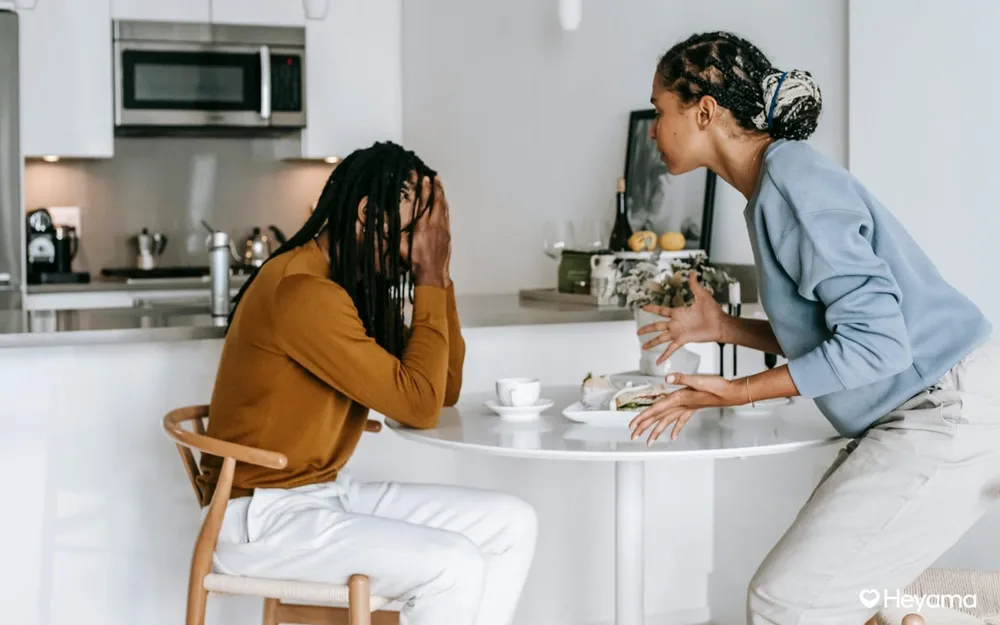
Texting every hour, wanting to know every detail of your partner's day, checking their social media… Control in a relationship often starts from a need for reassurance, but over time it smothers the bond. Love cannot grow without trust.
Where the need for control in a relationship comes from
Control is often rooted in fear: fear of being cheated on, abandoned, replaced. These fears sometimes come from a past relationship where you were hurt, from low self-confidence or from jealousy you struggle to manage. But this fear is healed through conversation, not surveillance.
Signs you are too controlling
- You need to know where your partner is at every moment.
- You worry or get angry when they do not reply right away.
- You secretly check their phone, messages or followers.
- You blame them for seeing friends or family without you.
- You want to decide where they go, what they wear or who they see.
If you recognise yourself in several of these points, do not panic: becoming aware of it is already a big step. These behaviours often give the illusion of protecting the relationship, when in fact they weaken it. The more you try to control everything, the more your partner wants to pull away.
Why monitoring damages the relationship
The person being controlled feels judged, suspected and deprived of freedom. They end up hiding harmless things to avoid arguments, which feeds even more distrust. It is a vicious circle. A healthy relationship is one where each person keeps their own space while staying sincerely connected to the other.
How to replace control with trust
- Name your fear: "I am afraid of losing you" is more honest and more touching than "Why didn't you reply?".
- Talk about your expectations: how often do you like to text? What reassures each of you?
- Respect their space: their friends, hobbies and phone belong to them.
- Work on your self-confidence: your own activities, plans and friends keep you from resting everything on your relationship.
- Get help if needed: if jealousy takes up too much room, talking to someone you trust or to a professional can help.
Example: from an argument to a real conversation
Fatou did not reply to Ibrahim's messages for a whole afternoon. In the past, he would have called her ten times, then accused her of hiding something. This time, he waits for her to get home and simply says: "When I don't hear from you, I worry. Can we find a way to reassure each other?" Fatou explains she was in a meeting, and they agree she will send him a quick note on long days. No monitoring, just an agreement between two people.
Trust does not mean being naive
Trusting someone does not mean accepting everything. If your partner lies to you regularly, disrespects you or gives you real reasons to doubt, the problem is not your need for control, it is the relationship itself. In that case, talk about it openly and set your boundaries. Trust is built by two people: it is given, but it is also earned.
And if it is your partner who controls you, learn to spot the signs of manipulation in a relationship. Control is never proof of love.
Trust from the start with Heyama
On Heyama, users highlight the importance of trust from the very beginning. The app encourages transparent conversations, with verified profiles and clear intentions. It is the ideal setting to build a relationship without pressure, based on mutual respect.
👉 Ready for a love story where trust is at the heart of everything?
Download Heyama and discover profiles that match you.