The clearest sign of a romance scammer is simple: someone you have never met in person asks you for money. Everything before that, the sweet morning messages, the plans to marry, the photos in uniform, is there to make that request feel normal when it comes.
Below are the six scripts scammers use most, the smaller warning signs that show up first, how to check whether someone is real, and exactly what to do if you've already sent money or photos.
What a romance scam looks like
A romance scammer builds a relationship online, often over weeks or months, then invents a problem only your money can solve. In francophone Africa they are called brouteurs, a word from Ivorian French, and Nigeria has a similar scene nicknamed the Yahoo Boys, according to Wikipedia’s article on brouteurs (in French). The same playbook runs from many other countries too, far beyond Africa. In Canada alone, the Canadian Anti-Fraud Centre recorded 63.3 million Canadian dollars lost to relationship fraud in 2025.
What most guides miss is who gets targeted. It isn't only retirees in Ohio or Kent. Scammers also write to the nurse in London who wants someone "from home", to the woman in Douala promised marriage by an "engineer in Canada", to the young man in Abidjan blackmailed after a video call. They know the food, the slang and the family pressure, and they use all of it.
And no, an African name or accent doesn't make anyone a scammer. The script gives them away, not the country.
The 6 most common romance scam scripts
The details change. The shape doesn't: a relationship that moves very fast, then an emergency. The US Federal Trade Commission's guide to romance scams lists the same storylines we see on WhatsApp and Facebook.
1. The soldier, engineer or doctor working far away
They're deployed with the army, working on an oil rig, or posted with an international organisation. The diaspora version: an engineer in Germany or Canada who's "coming home soon to do things properly". The job explains why you can never meet, and usually why their money is "stuck". The FTC's look at romance scammers' favourite lies found that a faraway military base is the most popular excuse of all.
2. The parcel held at customs
They tell you they've sent a gift: a phone, jewellery, cash. A few days later a "courier" or "customs officer" gets in touch. The parcel is held and there's a fee to release it. There was never a parcel.
3. The plane ticket or visa
They want to come and see you. Everything is ready except the ticket, the visa or the hotel. The reverse version targets people living in Africa: they'll bring you to Europe or North America, once you pay the "processing fees".
4. The emergency
A mother in hospital, a car accident, a bank account frozen abroad. It has to be paid today. The urgency has one job: to stop you thinking it through and telling anyone.
5. The investment
This one doesn't ask for anything at first. They show you how much they make on a crypto platform and offer to help you "start small". Gains appear on the screen, you put in more, and when you try to withdraw there's a fee. The money never comes back.
6. Sextortion after a video call
A very attractive profile, a conversation that turns intimate fast, a video call where the other person undresses and invites you to do the same. It's recorded. Next comes the threat: pay, or the video goes to your Facebook friends, your family, your employer. Men and women are both targeted.
Watch for the small asks too: airtime, transport money, "just a little" by mobile money for an electricity bill. A small amount sent without questions tells them the next one will come.
Romance scammer red flags
One of these doesn't make someone a scammer. Several together should stop you.
- It's moving very fast. "My love" after three days, talk of marriage after two weeks, messages from morning to night.
- They want to leave the app straight away for WhatsApp, Telegram or Instagram DMs, where nobody moderates the chat. In FTC data, nearly 60% of people who reported losing money to a romance scam in 2025 said it started on social media.
- Meeting is always impossible. Always abroad, always on a mission. On video, the camera is broken or the connection drops after ten seconds.
- The photos look too good: few of them, polished, never with friends or anywhere you could recognise.
- The story shifts: their age, their city, their job, their sister's name.
- They ask you to keep it secret. "Don't tell your family, they wouldn't understand."
- They ask for money, especially by wire transfer, mobile money to someone else's number, gift cards (they'll want the codes) or crypto. The FTC flags these because the money is hard to get back.
- They guilt you when you hesitate. "I thought you loved me."
A video call doesn't prove much any more
"Ask for a video call" used to settle it. It still helps, but it's no longer enough. In December 2024 the FBI warned that criminals use generative AI to create images, voices and videos, including videos for live video chats and to "prove" they're real people.
So call at a moment you choose, without much notice, and ask for something specific on the spot: hold up three fingers, turn your head, pass a hand in front of your face. The FBI suggests looking for details fakes often get wrong, like odd hands or teeth, eyes that don't match, and shadows that fall the wrong way.
How to check if someone is real
- Reverse search their photos. Save a profile picture and run it through Google Lens or TinEye. If it turns up under another name, on a model's account or a US soldier's page, you have your answer.
- Search their story. Type their job and situation plus "scam": "oil rig engineer Dubai scam", "UN doctor scam". The FTC recommends this because the same scripts get reused word for word.
- Ask local questions. They say they grew up in Douala or Accra? Ask where they went for grilled fish at the weekend. Someone who lived there answers without thinking.
- Suggest meeting. In daylight, somewhere public in your city, with a friend who knows where you are. If it's still impossible after weeks, that isn't shyness. Our guide on when to meet an online match in person helps you plan that first date.
- Tell someone. A sister, a friend, a colleague. Scammers hate outside eyes, because outsiders see straight away what love makes hard to see.
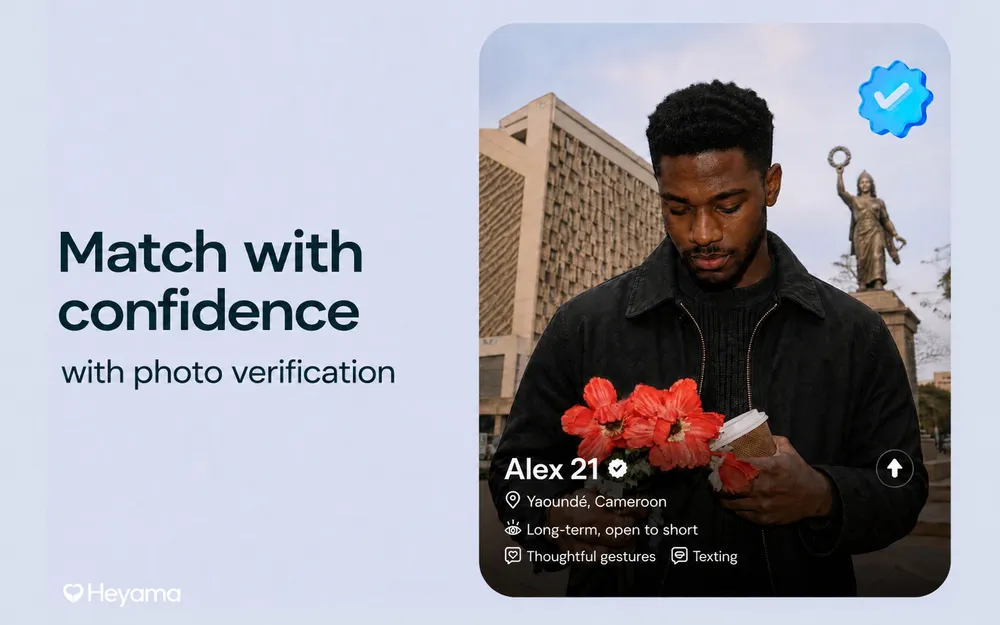
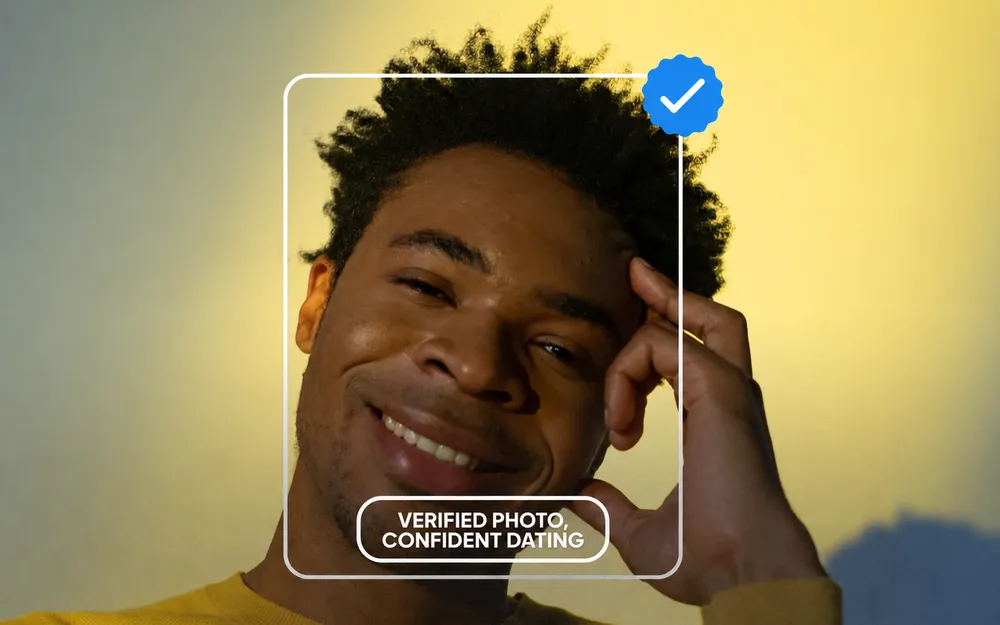
On Heyama, look for the "Certified profile" badge: the member took a selfie copying a specific hand gesture, and someone on the team checked it. Phone numbers and email addresses are refused in DMs and bios, and a "Be CAREFUL" sheet appears when you open a new conversation, reminding you never to send money. The badge shows the person looks like their photos, not that they're honest, so the money rule still applies everywhere. For more, read how to spot a fake dating profile and the red flags to watch for on dating apps.
What to do if you've already sent money
- Stop all payments, including "the last one to release everything". There will always be another last one.
- Save the evidence before you block: screenshots of the chat, their phone number, profile name and link, transfer receipts, mobile money transaction references.
- Call your bank, the transfer service or your mobile money provider today. Report the transaction and ask what can be done. The FTC advises contacting them right away.
- Report the profile on the app or social network where you met, then block it. On Heyama, tap the three dots at the top right of the conversation, then "Report this profile" (reporting needs a certified profile).
- Report the scam to the authorities where you live (table below).
- Beware of "recovery" offers. Other scammers contact victims promising to get the money back for a fee. The FTC puts it plainly: if someone asks for an upfront fee to recover your money, that's a scammer.
Where to report a romance scam
As of November 2026. Contact details sometimes change, so check the official site before you call.
| Where you live | Report to | Good to know |
|---|---|---|
| United States | The FTC at ReportFraud.ftc.gov and the FBI at ic3.gov | The IC3 says it will never contact you directly to ask for information or money. |
| United Kingdom | Report Fraud (it replaced Action Fraud): reportfraud.police.uk or 0300 123 2040 | In Scotland, call Police Scotland on 101. |
| Canada | Canadian Anti-Fraud Centre: 1-888-495-8501, plus your local police | You can report anonymously. |
| Côte d'Ivoire | The cybercrime police (PLCC), through ANSSI: cybercrime@anssi.gouv.ci, +225 27 22 48 97 77. Online form: signalement.anssi.gouv.ci | The form is a report, not a formal complaint. |
| Cameroon | A complaint at the nearest police station or gendarmerie. ANTIC, the national digital security agency, lists a toll-free number: 8202 | Bring screenshots and your mobile money transaction references. |
| Senegal | The national police platform: signalementcyber.dgpn.sn | For a formal complaint: the cybercrime division in Médina, Dakar, +221 33 889 42 18. |
| France and Belgium | France: THESEE online, explained on Service Public (in French), or 0 805 805 817. Belgium: your local police | Both countries let you file at a police station too. |
If someone threatens to share intimate images
- Don't pay. Blackmailers rarely stop after one payment, and paying tells them you will pay again.
- Stop replying and block them, after saving screenshots of their profile and messages.
- Report it to the police or the reporting service in your country (table above). If you're under 18 in the US, the National Center for Missing & Exploited Children runs CyberTipline.
- If images were posted, report them to the platform. If you were 18 or over in the images, the free tool StopNCII creates a digital fingerprint of them on your own phone, without uploading them, so partner platforms can block copies.
The shame isn't yours. The person committing a crime is the one on the other side. To avoid getting there, read why you should never share intimate photos on a dating app.
Why smart people fall for it
Scammers aren't amateurs. They work from ready-made scripts, take notes on everything you tell them, and know exactly when to say what you want to hear. They lean on very human things: loneliness after a breakup, the aunt who asks "so when are you getting married?" at every family event, the wish for someone who shares your culture when you live far from home.
Being taken in says nothing about your intelligence. It says you trusted someone. If it happens, tell someone early and report it. The people who stay silent are the ones who keep paying the longest.
Romance scam FAQ
What is the biggest red flag of a romance scammer?
A request for money, gift cards or crypto from someone you haven't met in person. Combined with a fast-moving relationship and a reason you can never meet, it's almost always a scam.
Can a romance scammer video call you?
Yes. Some use pre-recorded clips or software that changes a face live. A video call you start, with a gesture you ask for on the spot, is a good sign, not proof.
Can I get my money back from a romance scammer?
It's hard, especially after a wire transfer or crypto. Your best chance is calling your bank or provider the same day and filing a report. Nobody can guarantee a refund, and anyone promising one for a fee is running another scam.
Should I report a scam if I only lost a small amount?
Yes. Your report can be linked to other cases against the same person, and it protects you if your name or photos are used later.
Online dating isn't a trap in itself. Strong couples meet that way every day, with people who want to see you, introduce you to their friends and never ask you for a thing. On Heyama you can choose the Wedding intention and look for the certified badge. Join Heyama and meet someone who shares your roots, and keep the golden rule: no money to someone you haven't met.